Interview with Katrīna Zariņa, Chairwoman of the Board of the Latvian Chamber of Commerce and Industry
26.01.2026
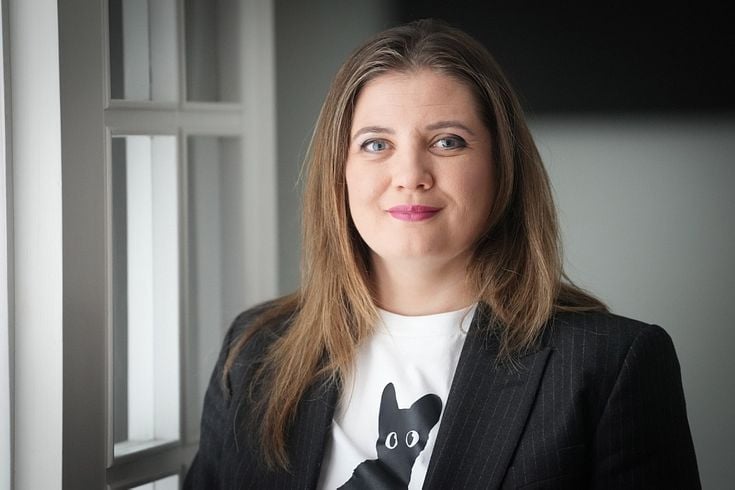
What could be the biggest challenges for Latvian entrepreneurs this year?
The parliamentary elections. Previous experience shows that election years are tense in the sense that no major decisions are made, but instead there are small, perhaps even trivial issues that are loudly discussed and give politicians the opportunity to show how good and clever they are. For entrepreneurs, this means that there is a lot of noise in the public sphere, but almost no results. That is why I say that the challenge for the new year is the parliamentary elections and the ability to make decisions.
All other challenges remain relevant and are not going away. We see this both in discussions with members and in various surveys. These are still the regulation of the business environment, the bureaucratic burden, the availability and cost of labor, and the availability of financing. This will most likely remain relevant this year, and the election year will not help to resolve any of these issues.
Isn’t there also concern that populist decisions may be made that could even be detrimental to the country’s development in the long term?
If, for example, we look at budget planning or various austerity measures, which should be considered in a timely manner at the beginning of 2026, we will most likely see the opposite trend in the pre-election year, with spending increasing. Fiscal discipline is likely to decline. It is therefore rather unfortunate that, last year, when working on the 2026 budget, it was not possible to achieve such significant reductions in expenditure. This will, of course, have consequences for the next three years, with the election year further increasing the desire to spend and satisfy voters’ expectations, which will, of course, be felt by entrepreneurs as the main money makers and taxpayers in this country. If we are talking about changes in tax policy, which we may already be hearing about, then we are very cautious about such ideas. Overall, the economy is developing very slowly, I would even say that it is stagnating, and in a situation where companies need to feel secure and stable in order to invest both their own and borrowed resources, any tax increase is not a good sign. We will monitor this very closely this year.
At the same time, defense spending is growing quite rapidly, and there are experts who say that we will not be able to avoid raising taxes. Do you expect this to happen?
Tax negotiations are always a process. We need to look at what we want to finance after raising taxes and how much of that will remain in the local economy. If we are talking about financing defense capabilities, then first of all we have a budget deficit, and secondly, we plan to use the European SAFE loan program, which will have to be repaid in ten years. And then there is the question of how much of this money we will use to buy defense capabilities abroad and give money to another economy, how much of this money will remain here in Latvia and settle in our economy, our industry, our companies. The Ministry of Defense has publicly stated that it will ensure that 30% of the funding remains here. However, this mechanism is rather unclear overall. Therefore, in this situation, to say that we are raising taxes to cover these expenses… Most likely, there will be negotiations about this. But we will be very critical of all taxes and tax increases, and we will very critically evaluate all proposals and their return and impact on the economy as a whole.
However, if we are talking about economic returns, let’s be honest – we can manufacture drones here, but we do not have the capacity to produce items that are critical for defense, such as medium-range air defense systems.
We cannot do everything, that is a fact, but there are things that we can do. Here we can talk, for example, about dual-use goods, innovations, information and communication technologies. When it comes to the traditional defense industry, we have not had one so far, although we are currently developing capacity in the field of ammunition, for example, which is logical given the growing demand. But if we look at dual-use goods and services, we have the capacity, the knowledge, and the opportunities.
However, if we come to the conclusion that taxes must be increased, what would entrepreneurs consider acceptable and what would be completely unacceptable? For example, Estonia increased its VAT rate.
We are generally opposed to tax increases.
We have also made proposals and discussed reducing labor taxes. Therefore, we definitely would not want to see any increase in labor taxes, as this affects labor costs and the competitiveness of our companies in the region and beyond.
We see that excise taxes are being raised regularly. Now the natural resources tax has also been raised. Yes, VAT is the only tax that has not been changed for a very long time, and this will be a topic of discussion. I would like to emphasize once again that we are generally opposed to tax increases, but we have to see how the situation develops.
However, when thinking about the budget, it must be said again and again that if politicians and civil servants are unable to find areas where savings can be made, where their work can be made more efficient, where the focus can be shifted from spending to investment, then talking about raising taxes in order to continue financing all the existing inefficiencies… It is very difficult for us to agree to this, because it is not good. It is not good to make your work inefficient, it is not good to not evaluate what can be left undone, to not perform a functional audit, but only to continue raising taxes. This is not sustainable.
The last few years have been full of turmoil and unexpected changes, starting with the pandemic and the war in Ukraine, and ending with the unpredictable tariff policy of the US. How successful have Latvian entrepreneurs been during this time?
The last five years have been full of challenges. Latvia was one of the economies that recovered most rapidly after the pandemic, companies were indeed very resilient to the crisis as a whole, and, of course, there was also a sufficiently broad state support program. Then the war started, followed by the energy crisis, and if we look at energy prices, they are still among the highest in Europe, which is the impact of the war. Energy prices remain a huge challenge. All of this together created hyperinflation, increased raw material prices, and labor costs, which in turn made goods and services more expensive and less competitive. The US “tariff war” did not take the most critical form that it could have taken. Initially, everyone felt that it would not affect us, as we have very little exports to the US, but if you look at the structure of our exports and understand that our main partners are Scandinavia and Germany, which in turn are major trading partners of the US, then it’s a different story. And all this has happened in five years. Therefore, I would say that Latvian companies have coped very successfully. They have also streamlined their operations, used support, digitized, automated, and robotized. In our organization, we also see that companies are increasingly looking at new export markets, seeking new opportunities, and diversifying their product and service portfolios. The latest LCCI index for 2025 also showed that optimism about the future is growing. We will see what the assessment will be in the new index.
You say that digitization and automation have taken place, but is it enough? Many experts also point out that if this does not happen quickly enough, Latvia may lose its competitiveness in the export market.
If we look at the European average, we have a very well-developed public sector digitization, which, of course, also pushes entrepreneurs in this direction to a certain extent. But there is also the issue of economic structure. We are dominated by small businesses with up to five employees. This is a group that is unlikely to embrace digitization, because they have their daily concerns, their daily struggle for survival, even though they are the ones who would most likely benefit from digitization and process efficiency and could develop more rapidly.
We also see that support programs are currently scattered across the board. Large businesses do a lot on their own without various forms of support and encouragement, because they understand that this is the only way to develop so that they can compete more successfully with similar companies not only in Latvia, but also in the Baltics, Scandinavia, and further afield in Europe. Small and medium-sized enterprises, on the other hand, use European Union fund support, and there is huge demand for this. I think that the impact will only be seen after some time, because it is a process that does not yield results in a single day. Most likely, it will take a year or two. However, it is precisely small businesses that need to be considered in the next steps.
How do you currently assess the export capacity of Latvian businesses?
I recently had a very interesting meeting with a company that exports everything it produces, and there are many such companies. At the same time, statistics on the total number of exporting companies do not show a positive trend in terms of growth. The number has remained between 4,000 and 5,000 in recent years. This means that new exporting companies are not being created, or that existing companies are not exporting. On a positive note, the number of large exporters with an annual export volume exceeding EUR 50 million is growing.
What we see in our daily work is that entrepreneurs often have the ambition to export, but lack the discipline to prepare for it. When you start breaking down what exporting means into its components, you realize that it’s not that simple. First, you need a really well-designed product. Then you need to find a buyer for that product, which is often a very long process. Then you have to produce everything in the required quantity and quality. You may have to finance production, because goods and services are only paid for after they have been received. I could go on, and many people’s enthusiasm wanes in the middle of this process.
My concerns, when looking at our country and its growth potential, are related to the fact that our market is small, with a population of 1.8 million, which is almost nothing on a global scale. Therefore, anyone who is just starting a business must think about how to export from the very beginning. This idea must be present at all times.
Next is a story about the country’s competitiveness and how the budget is formed. Currently, exports account for up to 70% of gross domestic product (GDP), but in recent years, the economy has been fueled by domestic consumption, as export markets have fluctuated and only in the last quarter can we talk about some return to growth in export markets. Total exports have still not returned to 2022 levels. Together, we need to think about how, first, to support those companies that already export and how they can find new markets or expand in existing ones, and second, how to increase the total number of exporters. This requires education, access to financing, and sometimes even very practical assistance. For example, large exporters often face the problem of a lack of labor. They need to increase capacity, but there is no labor force or it does not have the appropriate qualifications. You can automate and robotize many processes, which large companies do to the maximum extent possible, but there are still jobs that require people, and increasingly highly qualified people at that.
I would also like to emphasize that companies themselves should view the resources invested in searching for export markets as an investment rather than an expense. Yes, perhaps the first 100 euros invested will not yield any return, but the next 100 euros will come back double, and the next 100 euros will come back triple. Of course, not all investments can be recouped, but this can open up new opportunities.
You already mentioned that this year’s big challenge is the parliament elections. Your colleagues from the Latvian Employers’ Confederation (LDDK), assessing the cooperation with the state administration so far, have said that the planning documents set out very correct and good goals, but there are problems with the actual plans and actions to achieve these goals. How would you assess the work of the current parlament and the government it has formed from the perspective of entrepreneurs?
These four years have been very dynamic, both in terms of events and the need to reorient our thinking. After the war began in Ukraine, the thinking of entrepreneurs, politicians, and civil servants shifted to how to prepare, how high the risk is, and how to mitigate it. As a result, some of the things that traditionally take place during the four-year term of the parlament were put on the back burner. Even more tragically, something very similar happened during the previous four-year term, because there was a pandemic. As a result, we have been putting a number of things on the back burner for eight years now, and we are still putting them on the back burner.
On the positive side, the focus has shifted to attracting investment. There is now a clear understanding that if we are economically strong and have external financing, this will increase our security and the willingness of our external partners to protect us, because their money is here.
However, when it comes to security and defense, I must say that civil defense has not been implemented to the extent that it could have been. I cannot say with complete certainty that Latvian companies are ready for the moment of truth. I am not convinced that the people of Latvia are ready for hour X. We have somehow become very focused on increasing our defense capabilities and spending, we have given a lot of support to Ukraine, but at home we have somehow forgotten to prepare for hour X. It’s not that nothing is happening, but we should be more prepared. That is why we are planning to focus more on this from our side. We can wait for someone else to take the lead, but if that does not happen for a long time, then I think everyone has to do more.
It should also be remembered that, as large amounts of money are being invested in improving defense capabilities, there are areas where these investments are being reduced, and these are difficult decisions that also affect overall economic development. The way events are unfolding suggests that the coming period will not be any easier.
Are there any issues that, in the opinion of the LCCI, should be addressed before the Parliament elections?
It would be good to start working on next year’s budget now and look at opportunities to save money and strengthen internal security capacity.
When thinking about further economic development, the issue of labor costs is important. We have been talking for a long time about changes to the regulations on sick leave. Together with the LDDK, we are actively working on changes to the Labor Law regarding the payment of overtime.
We need to talk about migration policy because, let’s be honest with ourselves, the demographic situation and its future outlook do not bode well. Attracting labor from third countries and the issue of smart migration policy has so far been politically sensitive and, perhaps, insufficiently discussed. All this creates tension in society and raises many questions. If you think about your company in the long term, it is clear that these people are needed.
You already mentioned that the LCCI, along with the LDDK, has expressed its position on changes to the Labor Law. The Latvian Free Trade Union Confederation, on the other hand, has taken a very categorical stance on many issues, even threatening strikes. Do you see any possibility of reaching a compromise between the demands of employers and employees?
Negotiations with trade unions have always taken place and are still ongoing.
The issue of overtime pay has indeed been dragging on, as it was on the table even before the pandemic. Here I must return to the story of investments. It must be understood that investors look at and evaluate a number of factors before making an investment decision. These include the cost and availability of labor. We have what we have in terms of availability. If the issue is not addressed at its core, what happens is that the best professionals are poached, which means that the average wage level is artificially raised, which is not always followed by productivity, which in turn has an impact on inflation. But overall, it is also a story about how wages are formed in general. Overtime is not a frequently used solution in companies, but when it does affect companies, labor costs double. For example, during the flu season, there is an increased need to replace other colleagues. Employers also have to finance health insurance, as immediate access to state-funded healthcare services is very limited. This creates additional costs. When investors look at all this, the situation does not look particularly good.
That is why a compromise with the trade unions must be found and negotiations must not be broken off again, as happened five years ago. We need investment, we need development projects, we need the economy to grow, and I am convinced that the trade unions understand this.
However, even now the discussion has been in the government, and now it has been moved to the parlament. Do you see any signs of compromise between employers and employees?
Both employers and employees have presented their arguments, and both sides have strong points. Of course, it is easier for politicians to say, “Well, if you can’t agree, then we won’t do anything, we won’t change anything.” But that is a policy of burying one’s head in the sand on the part of politicians: if you can’t do it, then we can’t do anything either. But that is not true.
The arguments have been presented, and perhaps politicians can find a compromise and be better negotiators between the two sides than if they were to talk directly to each other. This is the responsibility of politicians, also when thinking about the long-term development of the country and their vision for its future, because this issue has been resolved in other European countries.
Before some parlament elections, it was common practice for business organizations to sign memoranda with political parties about what they would do if they came to power. Knowing how the situation developed afterwards, do you see the point of this?
We haven’t talked about signing a memorandum. What we will do, together with the LDDK and most likely the LaSER think tank, is set four major strategic goals and then break them down into 10-15 sub-goals. From mid-February or March, we plan to meet with political parties and invite them to include these goals in their programs, and then we will see how they act. In the next phase, we plan to organize debates with candidates for the position of prime minister and candidates for the position of sectoral ministers. This year, we will also hold debates in the regions with the leaders of the electoral district lists to give entrepreneurs the opportunity to get to know the candidates and hear what they think. After the elections, there will be a government declaration and action plan, where we will discuss what has been included from our initial goals.
Continuing on the subject of memoranda, the LCCI was one of the organizations that signed a memorandum on reducing food prices in May last year. For example, another signatory, the Farmers’ Parliament, has already expressed disappointment with the impact of the memorandum. How does the LCCI assess this?
I believe that the fact that all parties came together and were able to agree on something at all is already a huge achievement. Next, we must remember the old saying that the devil is in the details, which emerge during implementation and make everything more complicated. A “low-price basket” has been introduced, and price reductions are also visible there. The next question is how many consumers choose the products included in this basket and, accordingly, how much this is reflected in consumers’ wallets. The next stage is price monitoring, which is essentially an innovative approach. We will see what people choose, how much they pay for it, and what the actual price inflation for food products is, because until now we have been looking at the average temperature in the hospital. The fact that much more accurate data will be available will also help to assess both the overall situation with food prices and the impact of this memorandum.
We had previously launched a social campaign called “Latvijas labums” (Good for Latvia), and we are ready to restart it so that consumers can see which products are made in Latvia and make their choices based on this criterion, which is important, for example, “Zemnieku saime” and Latvian producers.
Prices are not formed in a vacuum and are influenced by the aforementioned labor costs, energy prices, logistics costs, and taxes. All of this together makes up the final price. Therefore, we must continue to talk and work together.
As the new chair of the LCCI board, what changes might you bring to the organization?
Jānis Endziņš has left me with a strong organization, so I don’t feel the need to rush into making changes. It is important to note that the chairman of the board manages the administrative work of the organization, but when it comes to the political position, which is more visible and known to everyone, we have members and a system for forming a common opinion. Therefore, when I say something, in most cases it is something that we have agreed upon with the members of the LCCI.
When it comes to administrative work, the LCCI also provides a range of services to its members to increase competitiveness and export capacity, which the LCCI Council, as the supervisory body, has asked us to develop. This is also what I will focus my time and energy on, alongside the more visible political work.
How many members does the LCCI currently have? How has this number changed in recent years? Which sectors are mainly represented by LTRK members?
We have more than 2,700 members, of which approximately 100 are various professional associations, business clubs, and regional associations, so if we also look at their members, the total number of companies is around 8,000. This is a significant number of Latvian businesses in all regions and of very different sizes. It is not surprising that most of them are small and medium-sized enterprises, as this reflects the overall structure of the Latvian business environment. The number of members has also been stable over the last five to six years. In terms of sectors, industry and services are fairly equally represented.
When the war in Ukraine began, the LCCI leadership confirmed that it would evaluate its members and exclude those who cooperate with the aggressor states of Russia and Ukraine. Has this happened? Do you still have members who work with Russia?
This is all related to the list published by the Ministry of Economics, from which we learned that we have members who have export relations with Russia and Belarus. We met with these members and discussed their views on whether they would continue their cooperation with Russia, terminate it, or terminate it gradually, as the possibilities vary in different sectors. A number of members informed us that they were discontinuing cooperation with Russia, and nothing changed in our relations with them. There were companies that said they did not plan to discontinue anything. Some of these companies withdrew themselves, and there were a couple that we excluded. A third group said that they needed some time to be able to terminate their cooperation with Russia. We plan to meet with a number of them to understand what has happened.
And what will happen if they have not ended their cooperation with Russia? Four years is a long enough time to find other markets.
We need to look at both the sectors and what they have or have not done. That is why this discussion is necessary.
Jaunākās ziņas
10.02.2026
The cost of non-competitive Europe
EU heads of state and government will gather at the picturesque Alden Biesen castle in the east of Belgium on ...
30.01.2026
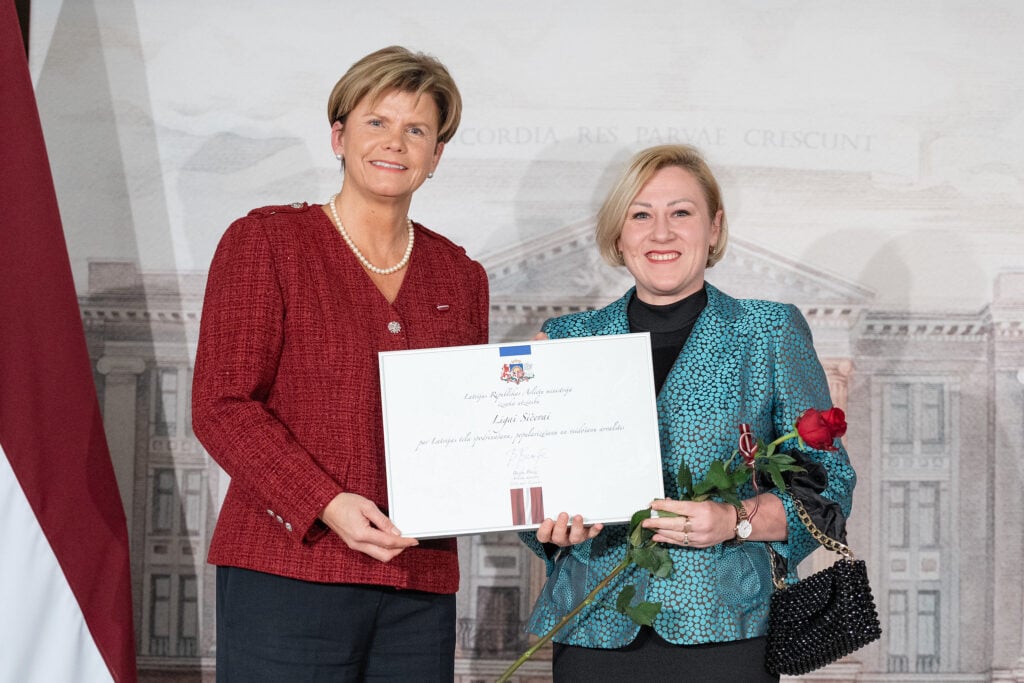
LCCI EU Project Director Līga Sičeva receives recognition from the Ministry of Foreign Affairs
As part of the events marking the 105th anniversary of Latvia’s international recognition (de jure), Foreign Minister Baiba Braže presented ...
12.12.2025
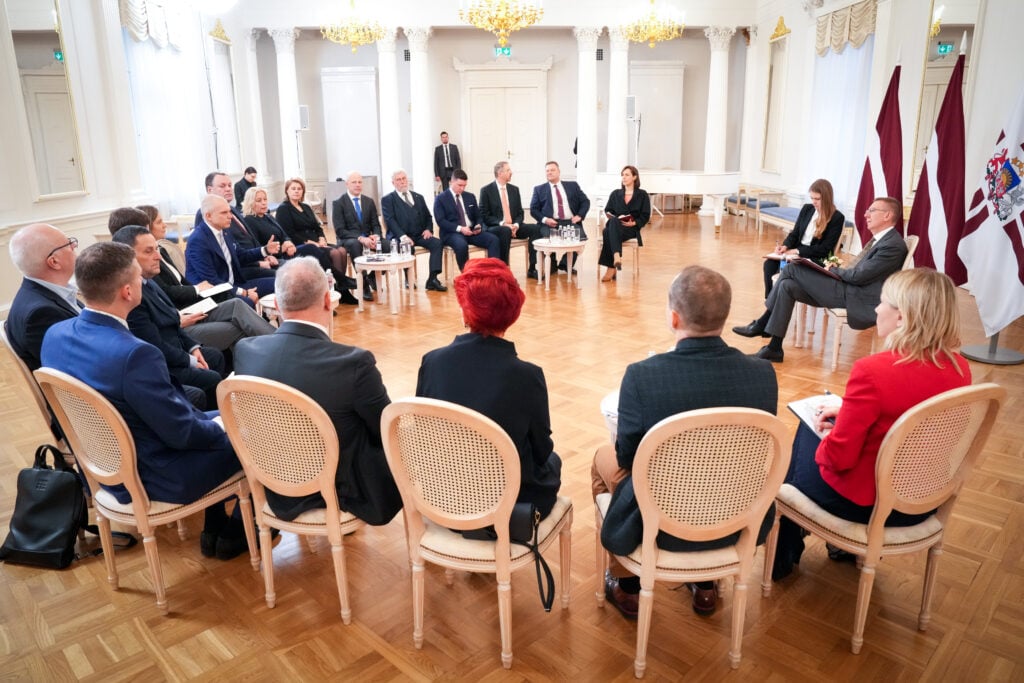
LCCI Council Meets with the President of Latvia, Edgars Rinkēvičs
Today, December 12, the Council of the Latvian Chamber of Commerce and Industry (LCCI) met with President Edgars Rinkēvičs to ...