The cost of non-competitive Europe
10.02.2026
EU heads of state and government will gather at the picturesque Alden Biesen castle in the east of Belgium on 12 February for what EU protocol defines as a European leaders’ ‘retreat’. Instead of rest, reflection, or spiritual renewal, the leaders will consider how to accelerate the so far minimal progress on European competitiveness since the famous Draghi Report was published nearly 18 months ago.
While the hypothetical costs of non-Europe have been well documented over the years, the real costs of a non-competitive Europe are rising, driven up by both external and homegrown factors.
Many European businesses increasingly find themselves caught between a rock and a hard place. Export-oriented strategies, widely pursued for years to tap into emerging new market opportunities, now expose them to heightened risk due to growing geopolitical tensions, tariffs and other and trade barriers. At the same time, focusing on the EU market exposes businesses to a highly regulated single market and persistent barriers to free movement.
One might assume that there would be broad political support for the EU to counter global uncertainty by doubling down on its efforts to restore multilateralism and sign deals with like-minded partners. Regrettably, some EU policy makers seem intent on undermining such efforts. The most recent case is the EU-Mercosur agreement, put on ice for up to two years by a slim majority of MEPs, just days after signing.
These tactics of exploiting procedural checks and balances are anachronistic in the unpredictable world of today, and they cost Europe dearly. According to a recent study by the European Centre for International Political Economy, the EU sacrificed €183bn in exports and €291bn in gross domestic product due to its failure to ratify the EU-Mercosur agreement. Stalling and populism are detrimental to Europe’s image as a reliable partner. We need collective dynamism and delivery, not inertia.
At the same time, Europe must maximise its own growth potential by controlling the controllables. Single market integration is key, and the cost of ongoing fragmentation is clear. International Monetary Fund research published in December 2024 estimated remaining single market barriers to be equivalent to tariffs of around 44% on goods and 110% on services. Reducing these barriers by 25% could increase the gross value added in the EU by around €350bn in the long term, as estimated by the German ifo Institute.
A January 2026 European Central Bank article estimates that trade frictions within the single market are more onerous than the highest tariffs threatened by Donald Trump last year and that trading in services across EU borders is almost twice as costly as trading within national borders.
Waiting for another Eureka-style moment as with the Maastricht Treaty in 1992 or putting out more ambitious competitiveness communications will not solve this crisis. The upcoming Single Market Roadmap must define a clear route to address the ‘Terrible Ten’ barriers identified by the European Commission last year and set milestones to gauge progress along the way.
Completing the single market today is less about grand political gestures and more about delivery. It requires the systematic removal of disproportionate regulatory barriers, one by one, based on evidence and close engagement with businesses. This is technocratic work that may not attract headlines, but it is the way to untap significant growth potential and enhance the EU’s economic security and autonomy.
Single market progress requires political buy-in from the member states. Measures that appear effective at national level may still constrain the EU’s collective strength and competitiveness. This is a hard pill to swallow in many member states and has often proved indigestible in the past. But not everywhere. The Benelux countries have for many years pioneered European economic integration by pursuing joint measures to enhance cross-border cooperation on digitalization, energy and labour mobility. The Baltic States are increasing their cross-border cooperation, notably on energy, financial services and transport infrastructure.
Such enhanced initiatives to foster economic cooperation and tackle obstacles should be harnessed as a basis for broader efforts to enable businesses to trade easily cross-border throughout the EU.
The single market is not a goal in itself. It is also not a framework for policy makers to pursue a diverse range of political goals and strategies. The single market is a mechanism designed specifically to enable freedom of movement, for people, products, capital, services and knowledge. With sustained political commitment at the highest level, it can become Europe’s superpower, drive growth, and strengthen the EU’s global economic, value-driven influence.
We urge EU leaders to keep in mind and to embrace an ambitious single market integration strategy at Alden Biesen for the rest of this legislative term.
Jaunākās ziņas
30.01.2026
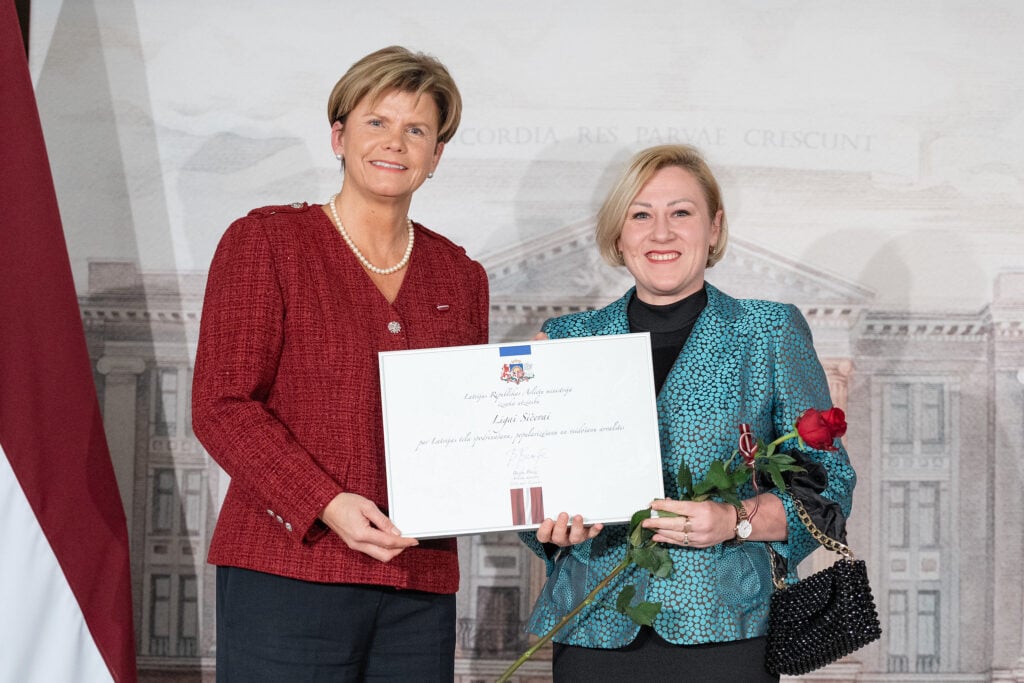
LCCI EU Project Director Līga Sičeva receives recognition from the Ministry of Foreign Affairs
As part of the events marking the 105th anniversary of Latvia’s international recognition (de jure), Foreign Minister Baiba Braže presented ...

26.01.2026
Interview with Katrīna Zariņa, Chairwoman of the Board of the Latvian Chamber of Commerce and Industry
What could be the biggest challenges for Latvian entrepreneurs this year? The parliamentary elections. Previous experience shows that election years ...
12.12.2025
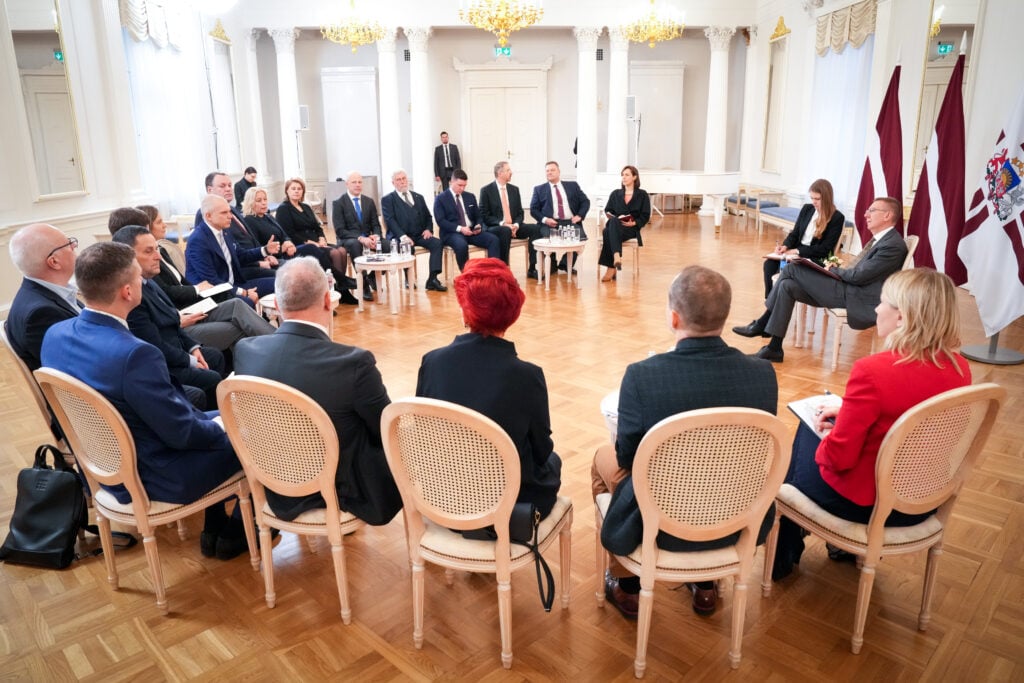
LCCI Council Meets with the President of Latvia, Edgars Rinkēvičs
Today, December 12, the Council of the Latvian Chamber of Commerce and Industry (LCCI) met with President Edgars Rinkēvičs to ...