Eurochambres Economic Survey: European Businesses Remain Resilient, but Confidence Is Lacking
04.11.2026
The European Association of Chambers of Commerce and Industry (Eurochambres) has conducted its 34th annual economic survey, collecting responses from 40,717 businesses across 27 European countries. The results paint a mixed picture of the outlook for European businesses in 2027. While sales expectations in both domestic and export markets have turned more positive for the first time in several years, driven by a recovery in demand and the gradual normalisation of trading conditions, overall business sentiment remains cautious. Employment expectations have remained negative for the fourth consecutive year, while investment expectations, although improved compared to the previous two years, remain below the historical average. Business confidence is also expected to decline slightly further, falling below the average of the past ten years.
Energy costs and the availability of raw materials at affordable prices have become the main challenges facing businesses in the coming year, overtaking labour costs. Regulatory requirements and administrative burdens rank second, followed by labour costs in third place and the shortage of skilled workers in fourth. Financing conditions and trade barriers are of lesser concern to businesses, although many small and medium-sized enterprises (SMEs) continue to face trade barriers both within the Single Market and beyond.
In Latvia, business expectations for the coming year have become less optimistic overall compared to the previous year. Nevertheless, business confidence remains high. Domestic sales prospects are viewed most positively, with Latvia ranking third among the countries included in the survey for this indicator. Export sales expectations are also positive, placing Latvia sixth. Employment expectations are positive as well, with Latvia ranking third, while the overall European outlook remains negative. Investment expectations are also positive, placing Latvia fifth.
This modest optimism in business sentiment is also reflected in the latest LTRK Index results. As early as the second quarter of 2026, the Future Index indicated positive expectations for the following six months. At the same time, assessments of the current situation were slightly pessimistic, with businesses particularly cautious in their evaluation of overall economic activity in the country. This highlighted a gap between businesses’ assessment of their own development prospects and their perception of the overall economic situation in Latvia.
For Latvian businesses, the main challenges in 2027 will be labour costs, which have ranked as the leading concern for the fourth consecutive year, and the regulatory burden. Latvia’s score for the latter is the highest among the Baltic States and one of the highest in the entire survey. More than half of the businesses surveyed identify the shortage of skilled workers as one of next year’s challenges, while approximately half cite energy costs. Latvia ranks fourth for this indicator. Trade barriers and financing conditions are the least concerning issues for Latvian businesses.
Katrīna Zariņa, Chair of the Board of the LTRK, comments:
“The forecasts provided by businesses should serve as a roadmap for the new Saeima and government in redirecting the course of the country’s economic development. First and foremost, solutions must be found to address high labour costs, which have long been one of the most significant challenges facing businesses. The fact that businesses are most optimistic about their domestic market prospects indicates that policymakers should pay particular attention to promoting exports. Although Latvian businesses’ export expectations are high by European standards, policymakers have an opportunity to tip the scales even further in favour of exports through targeted decisions. Exports are our opportunity.”
The latest LTRK Index results also demonstrated the importance of exports in shaping business sentiment. In the second quarter of 2026, the sentiment index among exporting businesses indicated optimism, while non-exporting businesses displayed slightly pessimistic sentiment.
Commenting on the latest economic survey results, Vladimír Dlouhý, President of Eurochambres, stated:
“European businesses continue to demonstrate their resilience. However, resilience without confidence is not a foundation for growth. The gap between the political commitments expressed by European Union (EU) policymakers – not only in Brussels but also in the Member States – and the everyday reality faced by small businesses remains too wide. Midway through the European Commission’s current mandate, this is the moment to accelerate action rather than simply consolidate what has already been achieved.”
Eurochambres calls on EU and national policymakers to:
- Make affordable energy a priority competitiveness issue. This means investing in clean domestic energy production, grids and storage, as well as accelerating permitting procedures.
- Ensure that regulatory simplification delivers tangible relief for businesses. Rapidly implement the Omnibus simplification packages, accelerate the implementation of the Action Plan for Simplifying Regulations, monitor the actual cost savings achieved for SMEs and prevent excessive additional requirements from being imposed when implementing EU legislation (gold-plating).
- Reduce the costs of employing workers. Review social security contributions for SMEs and consider targeted relief measures for labour-intensive sectors.
- Address the shortage of skilled workers. Support training and apprenticeship programmes, involve businesses in updating vocational education programmes and facilitate the recognition of qualifications across borders.
- Help SMEs adopt digital and artificial intelligence technologies. Expand investment incentives through InvestEU and the Digital Europe Programme, and make training in digital and AI skills more accessible to smaller businesses.
- Improve SMEs’ access to finance. Make progress on establishing the Savings and Investments Union to deepen capital and debt markets for smaller businesses, and ensure that sustainable finance rules do not indirectly exclude SMEs from bank lending.
- Complete the Single Market and conclude outstanding trade agreements. Particular attention should be paid to the services market, while trade agreements should include robust provisions to protect the interests of SMEs.
Jaunākās ziņas
16.09.2026
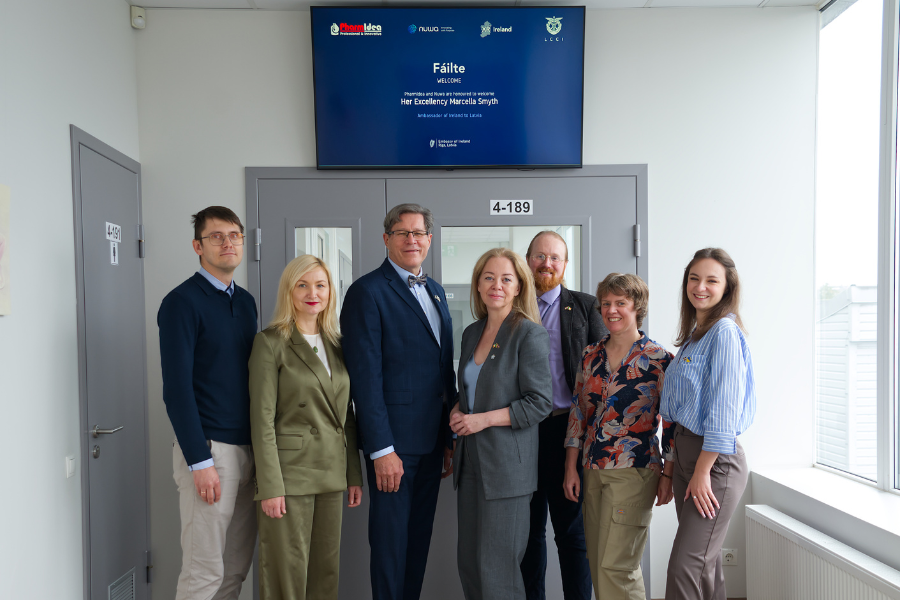
Latvian and Irish Companies Collaborate on Innovation in Pharmaceutical Manufacturing – A Joint Path Towards Innovation in Drug Production
Cooperation between Latvian pharmaceutical company SIA “PharmIdea” and Irish technology company Nuwa, supported by a project involving the Latvian Chamber ...
19.08.2026
From Opportunity to Partnership: How Latvian Companies Can Enter the Japanese and Korean Markets
Japan and the Republic of Korea offer significant growth opportunities for Latvian companies, but successful market entry does not usually ...
17.08.2026
Five Business Opportunities for Latvian Companies in Japan and the Republic of Korea
Japan and the Republic of Korea offer increasingly attractive opportunities for Latvian companies looking to expand into new export markets. ...