Five Business Opportunities for Latvian Companies in Japan and the Republic of Korea
17.08.2026
Japan and the Republic of Korea offer increasingly attractive opportunities for Latvian companies looking to expand into new export markets. Both countries are investing significantly in digital transformation, advanced manufacturing, artificial intelligence, healthcare innovation, semiconductors and green technologies, creating growing demand for specialised digital solutions.
Importantly, these opportunities are not limited to large multinational companies. More than 600 European SMEs have explored the Japanese and Korean markets in recent years with the support of the EU Business Hub – Japan and the Republic of Korea programme. Many companies that have successfully established partnerships employ fewer than 100 people and compete through specialised expertise, flexibility and innovation.
Smart manufacturing and artificial intelligence
Manufacturing companies in both Japan and the Republic of Korea are increasingly investing in technologies that can improve productivity, reduce energy consumption and address labour shortages. This is driving demand for artificial intelligence solutions, predictive maintenance, industrial Internet of Things, digital twins and factory automation.
This creates opportunities for Latvian companies with expertise in software development, electronics, telecommunications, sensor technologies and industrial IoT. Machine vision, remote monitoring, embedded software and data analytics solutions may be particularly promising.
Digital healthcare
More than 29% of Japan’s population is aged 65 or over, while the Republic of Korea continues to increase investment in digital healthcare and smart hospitals. As a result, demand is growing for remote patient monitoring, AI-assisted diagnostics, medical software, digital therapeutics and health data platforms.
For Latvian companies operating in medical technologies, software and artificial intelligence, this creates long-term growth opportunities. At the same time, successful partnerships in this sector require trust, product validation, an understanding of regulatory requirements and long-term engagement in the market.
Cybersecurity and digital infrastructure
The rapid adoption of cloud computing and artificial intelligence in Japan and the Republic of Korea is also increasing the need for secure digital infrastructure. Companies and institutions are investing in cybersecurity, cloud security, compliance and identity management.
Latvian companies can build on their expertise in cybersecurity, fintech, digital identity, secure payments and regulatory technology to address these needs.
Smart mobility, logistics and green technologies
Investment in smart infrastructure and the green transition in both countries is creating demand for logistics optimisation, fleet management, connected mobility, energy monitoring and smart infrastructure solutions.
This opens opportunities for Latvian companies developing IoT platforms, logistics software, AI analytics, smart mobility technologies and energy management systems.
Opportunities across the semiconductor value chain
The semiconductor industry is about more than chip manufacturing. Japan and the Republic of Korea are investing across the entire value chain – from advanced materials and testing to automation, robotics, artificial intelligence, industrial software and specialised equipment.
This means that Latvian companies working in electronics, photonics, telecommunications, embedded systems and precision engineering can also find opportunities to become part of this value chain.
The markets of Japan and the Republic of Korea offer broader opportunities than may initially appear, and the specialised expertise of Latvian companies can be a competitive proposition even in these highly advanced technology markets.
Support for the first step
The EU Business Hub programme offers not only business missions, but also tailored B2B matchmaking, market information, business consultations, networking with Japanese and Korean companies and financial support for accommodation during business missions. This allows European SMEs to explore these markets with lower risk.
The programme also offers specific business missions in technology, medical technology and energy, including EU Business Hub @ Semicon Japan 2026, as well as applications for EU Business Hub @ KIMES 2027 and EU Business Hub @ Smart Energy Week Spring 2027.
The Japanese and Korean markets may seem distant and complex, but successful market entry does not have to happen in a single step. The key is to start by understanding the market, finding the right partners, testing demand and building relationships over the long term.
Jaunākās ziņas
16.09.2026
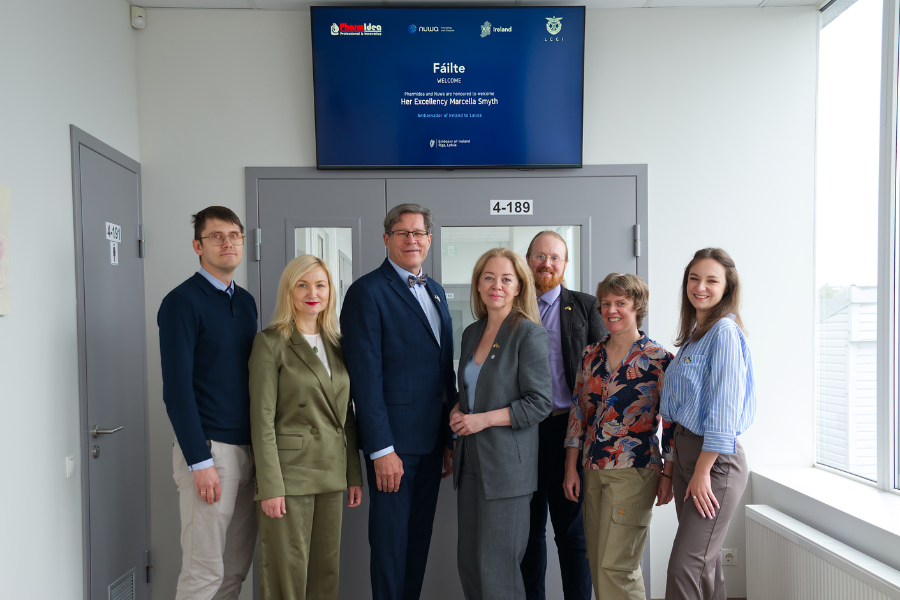
Latvian and Irish Companies Collaborate on Innovation in Pharmaceutical Manufacturing – A Joint Path Towards Innovation in Drug Production
Cooperation between Latvian pharmaceutical company SIA “PharmIdea” and Irish technology company Nuwa, supported by a project involving the Latvian Chamber ...
19.08.2026
From Opportunity to Partnership: How Latvian Companies Can Enter the Japanese and Korean Markets
Japan and the Republic of Korea offer significant growth opportunities for Latvian companies, but successful market entry does not usually ...
03.07.2026
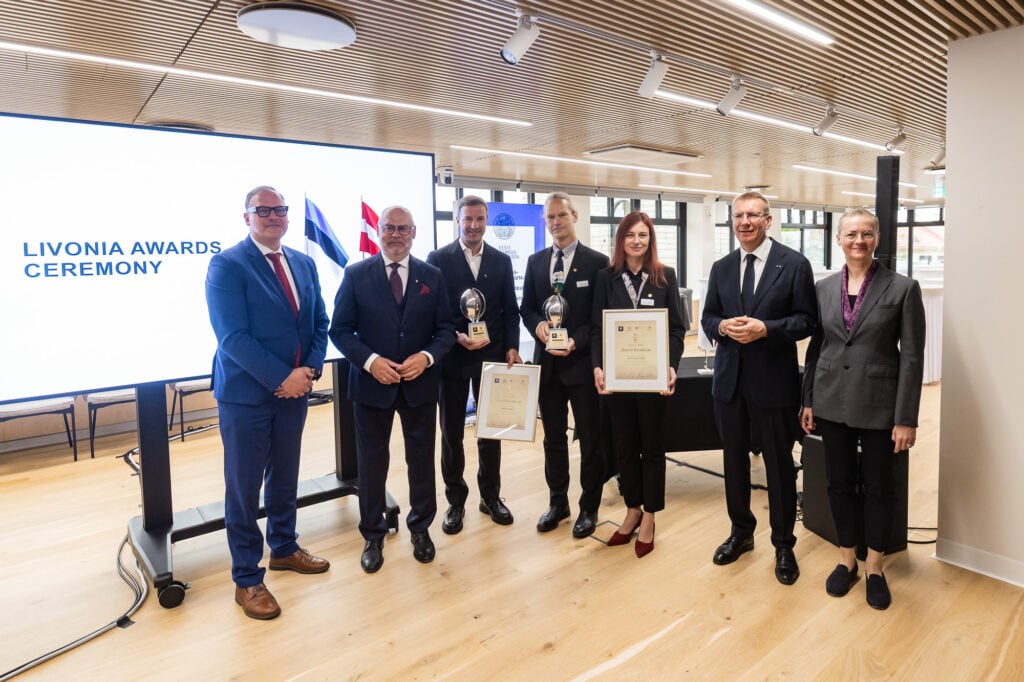
Livonian Awards Presented to Kalve Coffee and SK ID Solutions
On Thursday, July 2, in Tallinn, Latvia’s largest business association, the Latvian Chamber of Commerce and Industry (LCCI), in cooperation ...