European partners gather in Groningen to help small businesses join the green hydrogen economy
25.06.2026
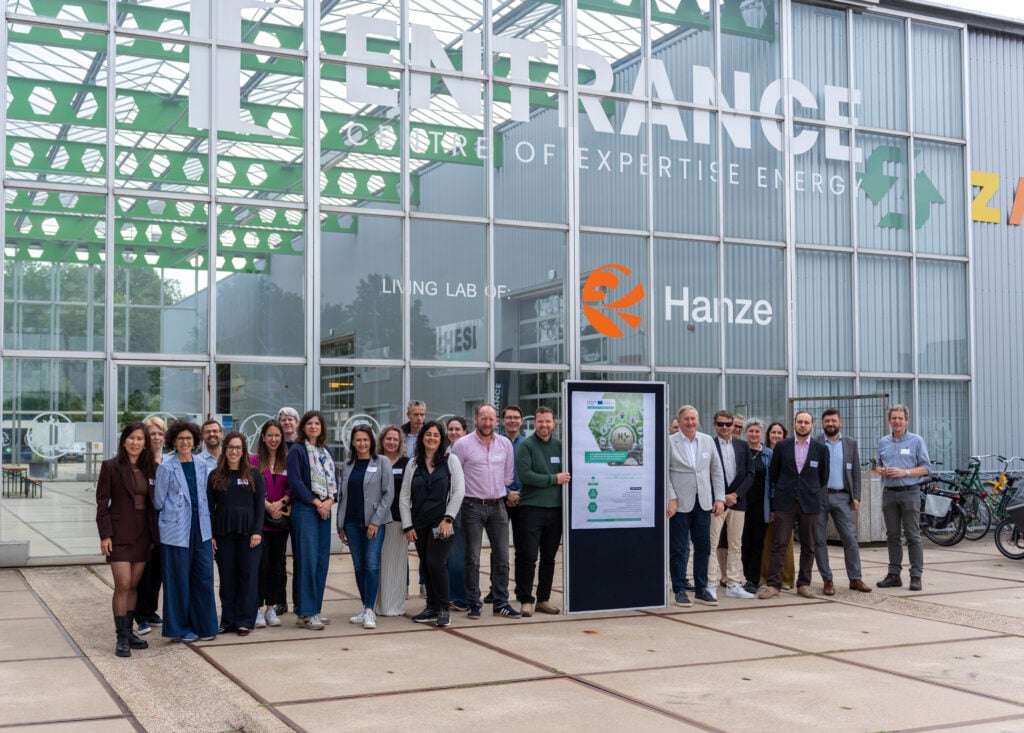
Representatives from across Europe met in Groningen last week to share ideas on how small and medium-sized companies can play a bigger role in the growing green hydrogen sector. The three-day visit, running from 16 to 18 June, brought together partners of the Green Hydra project, a European initiative that helps regions design better policies for clean energy.
Green hydrogen – a clean fuel made using renewable electricity – is widely seen as an important part of Europe’s shift away from fossil fuels. But smaller businesses often struggle to take part, facing hurdles such as high costs, complex rules, and limited access to expertise. The Green Hydra project aims to offer ideas how to break down those barriers so that more local companies can benefit from the new opportunities the sector creates.
Learning from a regional leader
The northern Netherlands was chosen as host because it is one of Europe’s frontrunners in hydrogen. Over the three days, the visiting partners heard from local experts, toured research facilities, and saw hydrogen technology being built first-hand.
The programme opened at the Centre of Expertise Energy in Groningen, where partners learned how the region has built a local green hydrogen network connecting producers and users, and explored the practical, legal, and economic lessons behind it. A guided tour of the centre’s laboratories gave a closer look at the research underway.
From theory to practice
Partners learned about 2 important projects, related to green hydrogen. H2opper is the project in which project partners jointly design and validate a hydrogen market and infrastructure that enables industrial companies in Delfzijl to realize the transition to hydrogen under their own management and cost-effectively, and offers an infrastructure provider the design for the cost-effective investment in the associated transport infrastructure. UNLOCK is also an Interreg Europe project, that aims at reducing disparities between European regions, enhancing organisational capacities of regional authorities, and improving policy instruments for enhancement of sustainable growth, SMEs competitiveness and job creation in SMEs, including by productive investments, in rapidly developing regional green H2 economies in 7 EU regions.
From obstacles to solutions
A central part of the visit was a series of hands-on workshops where partners work together to pin down exactly what is holding small businesses back – and, more importantly, what governments and regions can do about it. Building on earlier work from a previous meeting in Seville, the partners continued to dig into the root cause of the barriers identified to proceed to elaborating recommendations for policymakers in their home regions in next meetings.
Seeing technology in action
On the final day, the group traveled to the province of Drenthe to visit Resato Hydrogen Technology, a company that builds hydrogen refuelling stations, and to tour its assembly site. Partners were given the opportunity to participate in the New Energy Forum at Entrance – Center of Expertise Energy, a national event that brings together professionals, entrepreneurs, students, educators, researchers, and policymakers to challenge existing paradigms and collaboratively drive the transition toward a sustainable future.
Why it matters
By the end of the visit, each partner region took home fresh ideas and a clearer plan for supporting small businesses in the green hydrogen economy – helping to ensure that the benefits of the clean energy transition are shared widely, not just by large players.
About Green Hydra
Green Hydra – “Improving Policies for Engaging SMEs in the Green Hydrogen Ecosystem” – is a project supported by the Interreg Europe programme and co-funded by the European Union. It brings together partners from 11 European regions to improve the policies that help small and medium-sized enterprises take part in the green hydrogen sector.
Jaunākās ziņas
16.09.2026
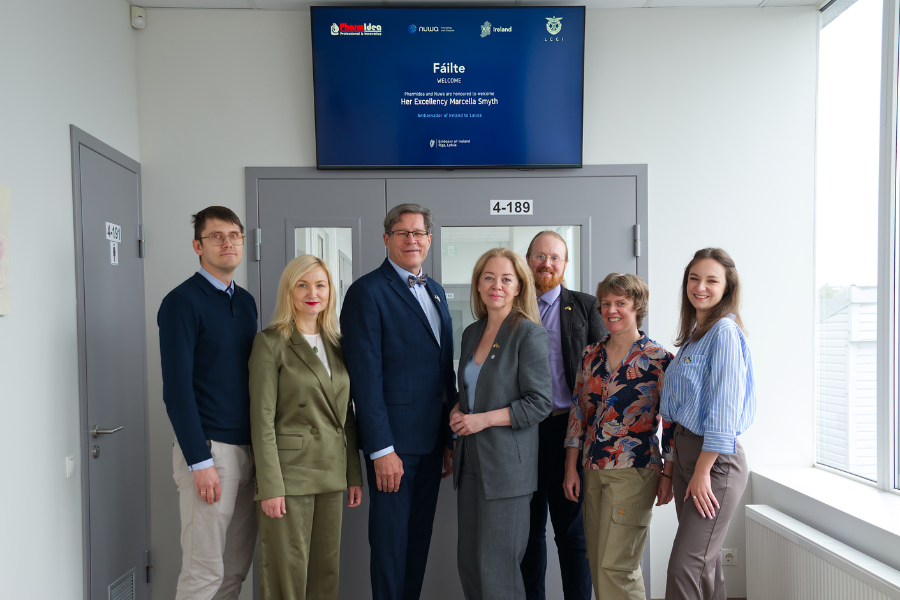
Latvian and Irish Companies Collaborate on Innovation in Pharmaceutical Manufacturing – A Joint Path Towards Innovation in Drug Production
Cooperation between Latvian pharmaceutical company SIA “PharmIdea” and Irish technology company Nuwa, supported by a project involving the Latvian Chamber ...
19.08.2026
From Opportunity to Partnership: How Latvian Companies Can Enter the Japanese and Korean Markets
Japan and the Republic of Korea offer significant growth opportunities for Latvian companies, but successful market entry does not usually ...
17.08.2026
Five Business Opportunities for Latvian Companies in Japan and the Republic of Korea
Japan and the Republic of Korea offer increasingly attractive opportunities for Latvian companies looking to expand into new export markets. ...